Mucar 892BT vs Mucar VO8 vs ThinkCar 689BT Scanner
Matched product:
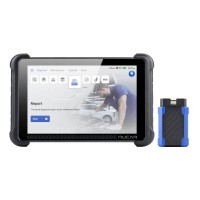
Lifetime Free Update MUCAR 892BT Bi-directional AI Diagnostic Scanner Supports CAN FD, DoIP, ECU Coding 35 Special Functions
- Item No. SP658
- Free Shipping
ECU Coding, Bi-Directional test & 34+ Maintenance Functions
Supports CAN FD DoIP
Multi-language, Lifetime free update
THINKCAR (parent brand of MUCAR) offers capable 8-inch bidirectional OBD2 diagnostic tablets aimed at DIY enthusiasts, independent mechanics, and small shops. The ThinkScan 689BT, MUCAR 892BT, and MUCAR VO8 share core professional features like full-system diagnostics, bi-directional controls, ECU coding, and lifetime free updates, but differ in hardware priorities, software extras, accessories, and target use cases.
Here comes a table comparison of ThinkScan 689BT, Mucar 892BT and Mucar VO8 diagnostic scanners.
| Parameter | ThinkScan 689BT  |
 |
 |
|---|---|---|---|
| Android OS | 10.0 | 10.0 | 8.0 |
| Screen | 8.0″ touch screen | 8.0″ touch screen | 8.0″ touch screen |
| RAM / ROM | 4G / 64G | 4G / 64G | 2G / 64G |
| Battery | 4150 mAh / 3.8 V | 4150 mAh / 3.8 V | 9450 mAh / 3.8 V |
| CPU | Cortex-A53, 4 cores @ 2.0 GHz | Cortex-A53, 4 cores @ 2.0 GHz | Cortex-A53, 4 cores @ 1.5 GHz |
| Camera | No | No | 8MP rear |
| Accessories | — | — | 10 OBD I Connectors |
| Custom Background | Yes | Yes | No |
| Supported protocols | CAN-FD DoIP ISO 14230-4 (KWP2000) ISO 15765-4 (CAN) ISO 9141-2 (ISO) ISO 14229 (UDS) SAE J1850 (VPW&PWM) |
CAN-FD DoIP ISO 14230-4 (KWP2000) ISO 15765-4 (CAN) ISO 9141-2 (ISO) ISO 14229 (UDS) SAE J1850 (VPW&PWM) |
ISO 14230-4 (KWP2000) ISO 15765-4 (CAN) ISO 9141-2 (ISO) ISO 14229 (UDS) SAE J1850 (VPW&PWM) |
| Free lifetime software updates | Yes | Yes | Yes |
| ECU Coding | Yes | Yes | Yes |
| AI Diagnosis | No | Yes (MUAI) | No |
| Bi-Directional Test | Yes | Yes | Yes |
| Reset Functions | 35 (+ ODO Check) | 35 (+ ODO Check) | 34 |
| VCI Placement | Bluetooth 5.0 (external VCI) | Bluetooth 5.0 (external VCI) | Bluetooth + Wi-Fi (built-in VCI) |
| Technician Community | No | Yes | No |
| APP integration | Chrome | Chrome, File Management, Gallery, Gmail, YouTube, Candy Crush Saga, Amazon Kindle, Duolingo, PDF Reader | Chrome |
| Expandable modules (purchased separately) | Universal Car Key Programmer, TPMS, Videoscope, Oscilloscope, Printer, Ble Battery Tester | TPMS, Videoscope, Oscilloscope, Printer, Ble Battery Tester | TPMS, Videoscope, Oscilloscope, Printer, Ble Battery Tester |
Hardware and Design Differences:
ThinkScan 689BT & MUCAR 892BT: Nearly identical high-performance hardware. Both use a powerful quad-core processor, 4GB RAM, and Android 10 for responsive operation, fast live data, and multitasking. They rely on an external Bluetooth VCI dongle (magnetic in some setups) for wireless freedom.
The Key Difference: AI Integration
The MUCAR 892BT distinguishes itself by incorporating AI functionality, specifically the “MU AI” intelligent assistance feature. This isn’t just a gimmick; it provides practical, time-saving benefits during real-world diagnostic work.
The Thinkcar 689BT, while an excellent tool in its own right, lacks this AI capability. Given that both tools are similarly priced—with the MUCAR 892BT currently available at a lower cost—the choice becomes clear for most users.
MUCAR VO8: Prioritizes endurance and integration. The large 9450 mAh battery excels for extended shop or field use without frequent charging. Built-in VCI eliminates dongle management, and it includes far more physical adapters for pre-OBD2/legacy vehicles plus an 8MP camera for documentation or basic inspections.
Software and Diagnostic Capabilities:
All three deliver:
- OE-level full-system diagnostics across 100+ brands (strong Asian/European/US coverage).
- Bi-directional/active tests and ECU coding/adaptations.
- Auto VIN, live data graphing, report generation, and IMMO key matching (vehicle-dependent).
- CAN-FD & DoIP support for modern vehicles; FCA AutoAuth capability.
- Lifetime free software updates (no subscriptions).
Differentiators:
MUCAR 892BT stands out with AI-assisted diagnostics (MU AI) for root-cause analysis, repair suggestions, and troubleshooting guidance.
ThinkScan 689BT offers very similar performance and features to the 892BT, often positioned as a strong value option with excellent real-world feedback for bidirectional controls and resets.
MUCAR VO8 focuses on core reliability and legacy vehicle support, with strong basic functions and extras like the camera.
Who Should Choose Which?
- Choose ThinkScan 689BT if you want top performance and value. Excellent balance of speed, features, and price for most DIYers and shops. Great for frequent use where snappiness matters.
- Choose MUCAR 892BT if AI diagnostics appeal to you. Ideal for users wanting intelligent assistance, faster insights, and premium software feel alongside powerful hardware.
- Choose MUCAR VO8 if battery life, built-in simplicity, and legacy OBD1 support are priorities. Best for mechanics working long hours or on diverse/older vehicles who value the camera and extra adapters.
Final Verdict
The ThinkScan 689BT and MUCAR 892BT are the closest and most powerful performers, with the 892BT adding AI as a notable edge for complex diagnostics. The MUCAR VO8 trades some processing power for superior battery life, integration, and accessory support—making it a solid choice for endurance and older-vehicle work.
All three represent strong value with lifetime updates and broad coverage. Real-world performance depends on your specific vehicles—check compatibility on the official THINKCAR/MUCAR site, read recent user reviews for your makes/models, and compare current pricing/deals. Consider warranty (typically 12 months) and expandable modules (e.g., TPMS, oscilloscope, videoscope) for future-proofing.